Solar energy is fundamentally a sustainability business.
Every solar module manufactured and installed is intended to generate clean electricity and reduce dependence on fossil fuels. But as the global solar industry grows, customers are asking a deeper question:
Is a company producing sustainable products also producing them sustainably?
This shift is reshaping expectations across the industry.
Today, solar module manufacturers are evaluated not only on efficiency, wattage, and cost, but also on how they manage environmental impact, labour practices, ethics, and supply chains. This is where EcoVadis is becoming increasingly relevant.
EcoVadis provides an independent framework to assess and communicate sustainability performance, helping manufacturers demonstrate how responsibly they operate across their value chain.
What Is EcoVadis?
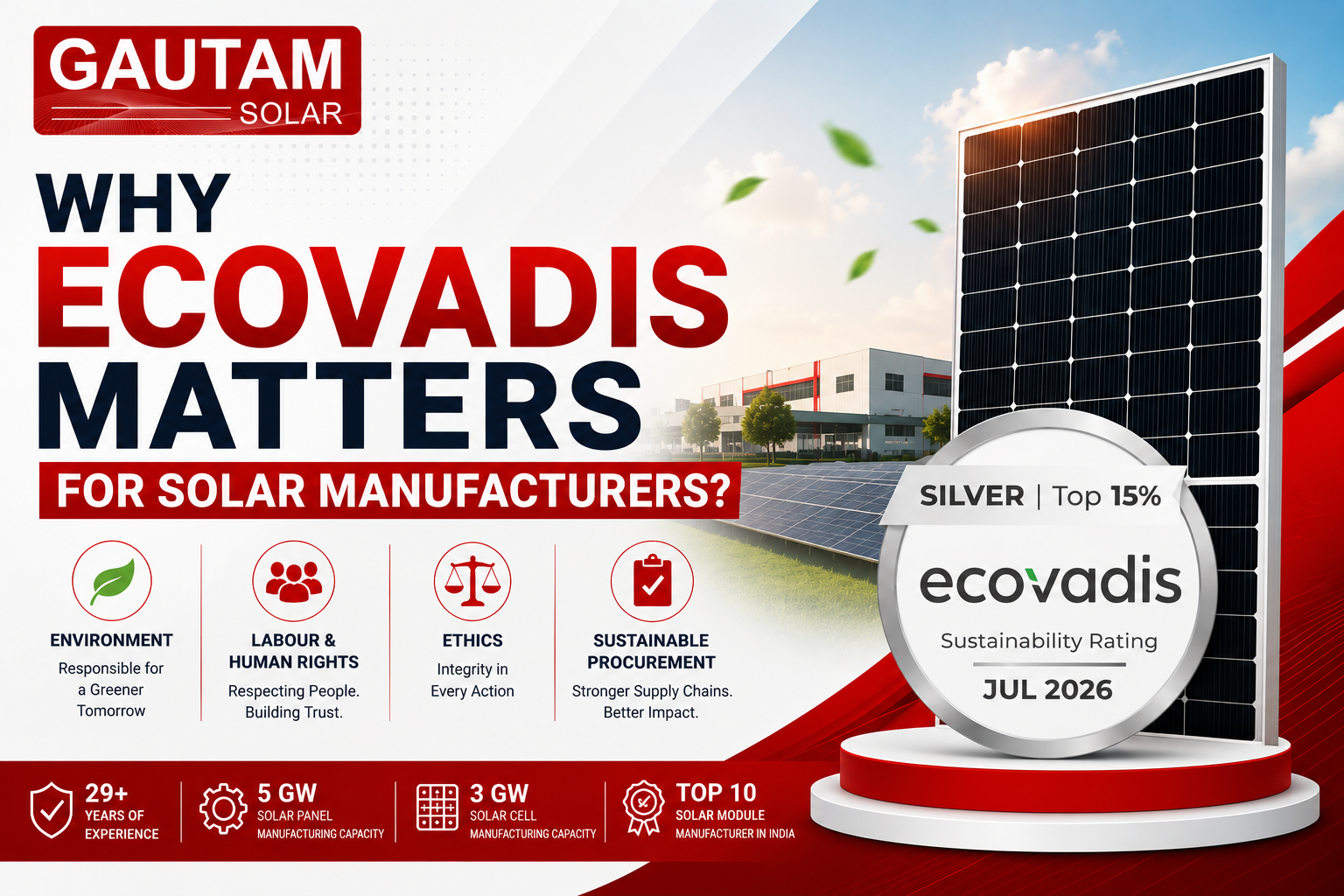
EcoVadis is a global sustainability rating platform that evaluates companies on ESG-related practices. It assesses four key areas:
Environment
Energy use, emissions, waste, pollution control, and resource efficiency.
Labour & Human
Rights
Health and safety, working conditions, human rights, and
non-discrimination.
Ethics
Anti-corruption, business integrity, data security, and compliance.
Sustainable
Procurement
How sustainability is managed across suppliers and sourcing practices. For solar manufacturers, these areas are critical due to the
complexity of global supply chains.
A Green Product Is Not Automatically a Green Process
Solar modules generate clean energy during operation, but manufacturing them involves energy, materials, chemicals, logistics, and multiple supplier layers. The value chain includes: Raw Materials → Polysilicon → Ingot → Wafer → Cell → Module → Logistics → Project Deployment At every stage, environmental and social impacts can exist. So while solar is a clean-energy product, the manufacturing process must also be continuously improved to be truly sustainable.
Buyers Now Look Beyond Technical Performance
Earlier, procurement decisions were mainly based on wattage, efficiency, technology, degradation rate, warranty, and price. These remain important, but are no longer enough. Large buyers now also evaluate ESG performance, supply chain responsibility, labour standards, ethical practices, and environmental systems. Sustainability has become a procurement filter, not just a reporting topic.
EcoVadis Adds Independent Credibility
Companies can publish sustainability claims, but customers increasingly prefer third-party validation. EcoVadis helps bridge this gap by evaluating companies based on documented evidence rather than self-declared statements.This shifts the narrative from “We are sustainable.” to “Our sustainability practices are independently assessed.” That difference matters in global procurement decisions.
It Broadens the Sustainability Lens
Solar companies often focus heavily on carbon reduction, but sustainability is broader. EcoVadis encourages attention to worker safety, human rights, ethical conduct, responsible sourcing, and anti-corruption systems. This helps manufacturers build a more complete sustainability framework, not just an environmental one.
Supply Chains Are Under Increasing Scrutiny
A solar module depends on a long and complex supply chain. Each layer introduces potential risks related to sourcing transparency, labour conditions, environmental impact, and supplier compliance. Manufacturers are now expected to know who their suppliers are, where materials come from, how suppliers are evaluated, and how risks are managed. Sustainable procurement systems help formalise this visibility.
Sustainability Is Now a Business Factor
Sustainability is no longer separate from commercial strategy. It influences customer selection, supplier qualification, financing decisions, global partnerships, and corporate reputation. For many multinational buyers, sustainability performance is now part of supplier evaluation—alongside cost and quality.
It Helps Identify Real Improvement Areas
One of the biggest benefits of EcoVadis is not the score,it is the insight. It helps companies identify gaps such as weak supplier sustainability controls, limited ESG reporting, incomplete policies or documentation, and areas needing stronger governance. This turns sustainability into a structured improvement journey, not a one-time exercise.
Supports ESG Reporting and Transparency
EcoVadis also supports broader ESG expectations by organising sustainability data across key themes.However, it is not a replacement for audits, certifications, or regulatory compliance. Instead, it acts as a complementary tool within a wider ESG framework.
Competitiveness Is Expanding Beyond Technology
Solar manufacturing competition is no longer only about efficiency, cost, scale, and quality. It now also includes responsible manufacturing capability. Companies that combine strong technology with strong sustainability systems are better positioned for long-term global competitiveness.
What Should Manufacturers Focus On?
Instead of treating sustainability as a reporting requirement, manufacturers should focus on reducing environmental impact, improving energy efficiency, ensuring worker safety, strengthening ethical practices, building responsible supply chains, and backing claims with measurable evidence. Because in today’s market, claims are not enough, proof matters.
Gautam Solar’s Sustainability Journey
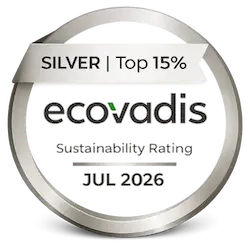
At Gautam Solar, sustainability is integrated into how we operate and grow. We are proud to have received an EcoVadis Silver Medal, placing us among the top 15% of companies assessed globally at the time of evaluation. This recognition reflects our ongoing commitment to environmental responsibility, ethical business conduct, labour and human rights, and sustainable procurement. As we expand globally, we continue to strengthen our sustainability systems to build a more responsible solar manufacturing ecosystem.
The Future of Solar Must Be Sustainable End-to-End
Solar energy exists to create a cleaner future, but that future depends on how responsibly the industry operates today. Sustainability must be embedded across material sourcing, manufacturing processes, workforce practices, supplier networks, and business governance. This is why frameworks like EcoVadis are becoming more relevant. They push the industry to look beyond the product,and focus on the process behind it. Because the future of solar will not be defined only by how much clean energy we generate,but by how responsibly we generate it.
FAQs
1. What is EcoVadis in simple terms?
EcoVadis is a global platform that evaluates how responsibly a company operates across environment, labour, ethics, and supply chain practices.
2. Is EcoVadis mandatory for solar companies?
No, it is not mandatory. However, many global customers now prefer or request it as part of supplier evaluation.
3. Why is EcoVadis important for solar module manufacturers?
Because it helps demonstrate that solar products are manufactured responsibly—not just that they generate clean energy.
4. Does EcoVadis measure product quality?
No. It evaluates sustainability management systems, not technical product performance.
5. What does an EcoVadis rating indicate?
It reflects how well a company manages ESG-related practices compared to other assessed companies.
6. Is EcoVadis a certification?
No. It is a sustainability rating, not a certification or compliance approval.
7. How does EcoVadis help customers?
It provides independent insight into a supplier’s sustainability practices, helping customers make more informed procurement decisions