Why Data Centres Are Embracing BTM Renewable Energy
1. Managing Rising Energy Costs
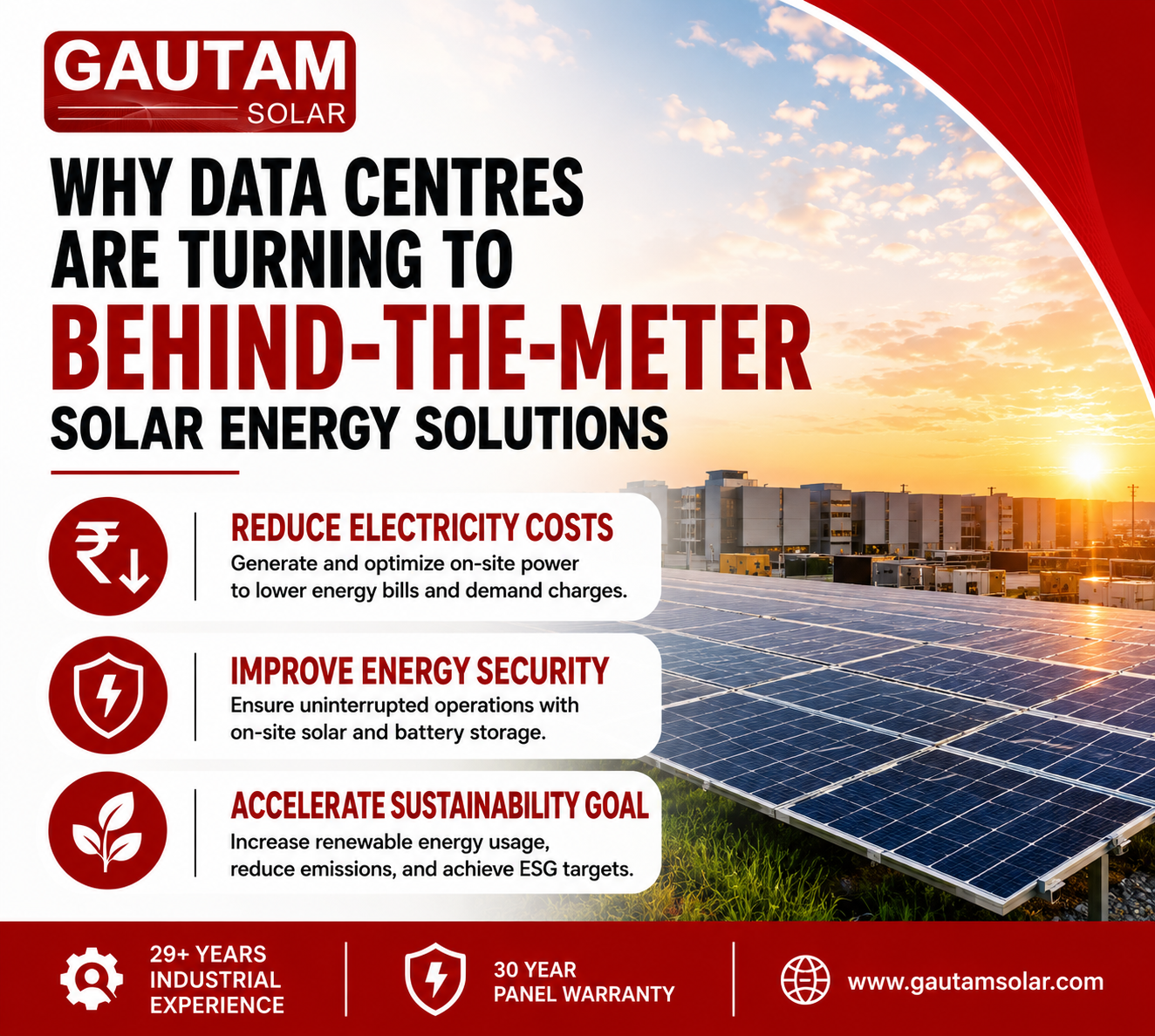
Energy costs typically represent 40–60% of a data centre's operating expenditure. With increasing electricity tariffs in India and surging power demand from AI and cloud workloads, controlling energy costs has become a board-level priority.
BTM solar generation offsets grid consumption and provides long-term cost predictability. Once installed, solar power delivers energy at a stable, low levelised cost (LCOE) — shielding operators from tariff fluctuations. Paired with BESS, facilities can store excess solar energy and deploy it during high-tariff peak hours, further optimizing energy spend.
2. Enhancing Reliability and Energy Resilience
Reliability is non-negotiable for data centres. Even brief power interruptions can impact critical operations, customer SLAs, and revenue. While UPS systems and diesel generators remain essential, battery storage is emerging as an additional, cleaner layer of energy security.
BESS capabilities for data centres:
• Instant backup power during grid disturbances
• Seamless transitions between power sources
• Load fluctuation management and power quality improvement
• Reduced stress and runtime on diesel generators
• Support for demand response programmes
Integrating solar and storage with existing infrastructure creates a more resilient, multi-layered energy architecture.
3. Supporting Sustainability and ESG Commitments
Global technology companies and colocation providers face mounting pressure to reduce Scope 2 carbon emissions and meet net-zero targets. BTM renewable energy provides a direct pathway.
Onsite solar generation enables facilities to consume clean energy at the source, displacing grid electricity that remains predominantly fossil-fuel based in India. Battery storage extends renewable energy utilization into non-generation hours.
The outcome: a lower carbon footprint, reduced diesel consumption, and stronger progress against ESG and sustainability reporting targets.
4. Overcoming Grid Capacity Constraints
As data centre clusters expand across Tier-1 and Tier-2 Indian markets, utility infrastructure is under pressure. Grid connection delays, capacity bottlenecks, and transmission constraints are common challenges for new developments.
BTM energy systems provide a complementary pathway by enabling onsite energy self-sufficiency. Reducing dependence on external infrastructure gives operators greater control over energy supply — a competitive advantage in a rapidly expanding digital infrastructure market.
Solar + BESS: The Technology Powering BTM Strategies
Solar PV Systems
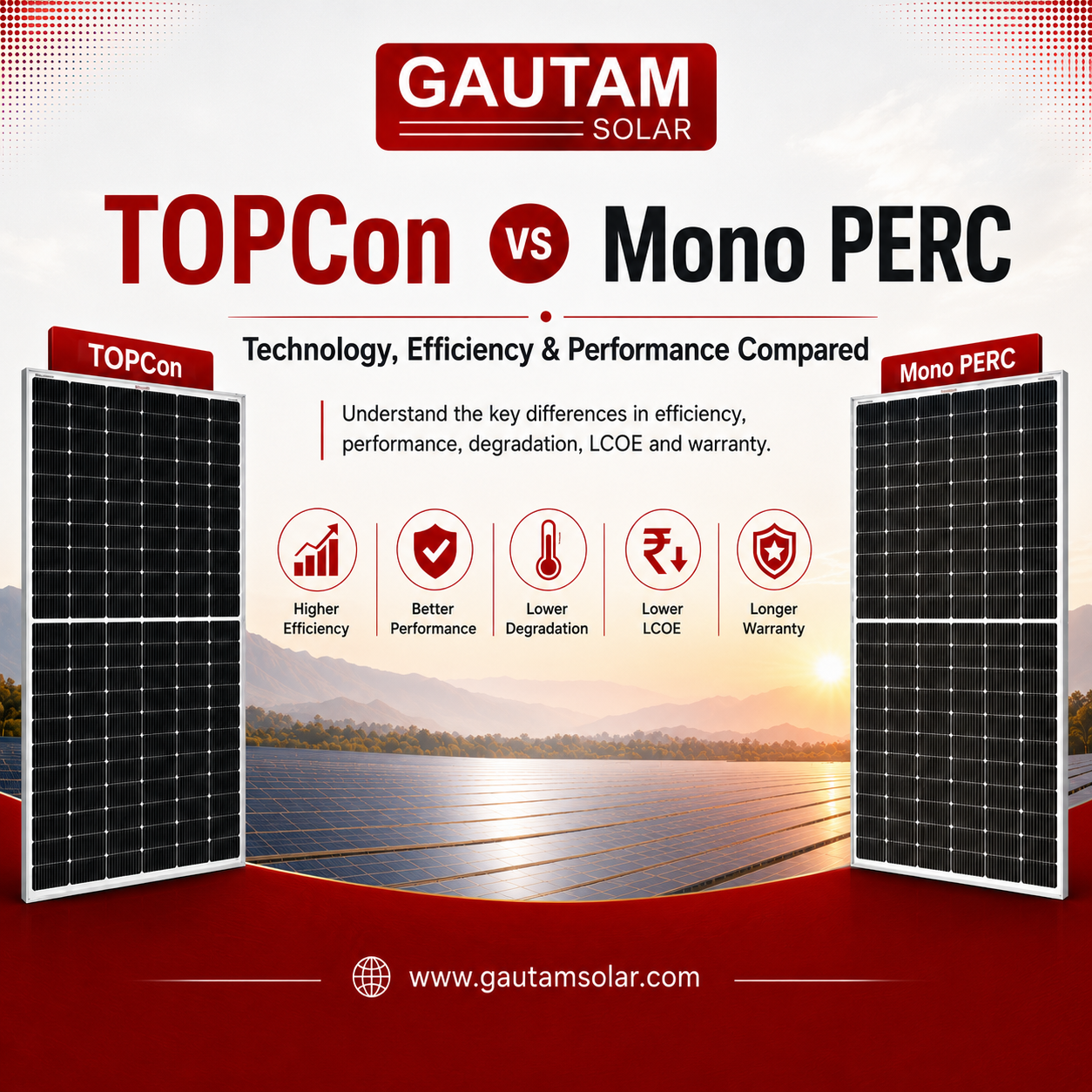
Solar PV generates clean electricity during daylight hours. Depending on available space and facility design, installations may include rooftop solar, ground-mounted solar, solar carports, or floating solar systems. High-efficiency TOPCon solar modules are particularly suitable for data centres where rooftop area is limited — delivering more power per square metre than conventional PERC technology.
Battery Energy Storage Systems (BESS)
BESS complements solar by storing energy for later use. Key applications in data centre environments:
• Peak demand reduction — discharge during high-tariff hours
• Energy arbitrage — buy cheap, deploy when expensive
• Backup power support — instant response during grid events
• Load balancing — smooth demand spikes
• Renewable energy optimization — maximize solar utilization
Together, solar and BESS create a flexible, responsive energy ecosystem capable of adapting to dynamic operational demands.
Key Implementation Considerations
Successful BTM deployment requires detailed pre-engineering assessment. Data centre operators should evaluate:
• Available rooftop area, structural load capacity, and shadow-free zones
• 24/7 energy consumption patterns and peak demand profiles
• Battery sizing requirements based on backup duration and use case
• Integration with existing electrical infrastructure (UPS, gensets, switchgear)
• Regulatory and net metering/open access framework in the relevant state
• EPC partner capability — particularly a manufacturer-EPC that controls module quality end-to-end
A comprehensive feasibility study and system simulation is essential before committing to design specifications.
The Future of Data Centre Energy in India
India's data centre market is forecast to grow at a CAGR exceeding 20% through 2030, driven by AI adoption, cloud expansion, data localization requirements, and 5G rollout. As energy demand scales, BTM renewable energy will increasingly shift from a sustainability differentiator to an operational necessity.
Operators who invest in BTM infrastructure today will benefit from:
• Long-term electricity cost savings and tariff insulation
• Greater energy resilience and uptime assurance
• Accelerated progress toward net-zero and ESG commitments
• Reduced exposure to grid capacity constraints
FAQ SECTION
Q1: What is behind-the-meter solar for data centres?
Behind-the-meter (BTM) solar refers to solar PV systems installed on the data centre's premises — on rooftops, ground mounts, or carports — generating power that is consumed directly by the facility before drawing from the grid. This reduces electricity bills and dependence on grid-supplied power.
Q2: How does BESS help data centres?
Battery Energy Storage Systems (BESS) store surplus solar energy generated during the day and release it during peak tariff hours, grid outages, or high-demand periods. For data centres, BESS acts as an additional layer of power backup alongside existing UPS and diesel generator infrastructure.
Q3: Is BTM solar viable for hyperscale and colocation data centres in India?
Yes. Hyperscale and colocation data centres are among the highest-priority segments adopting BTM solar in India, given their large energy footprints and ESG commitments. High-efficiency TOPCon solar modules and advanced EMS platforms make BTM deployments feasible even where rooftop area is constrained.
Q4: What are the ESG benefits of BTM renewable energy for data centres?
BTM solar directly lowers a data centre's Scope 2 carbon emissions by replacing grid electricity (which is largely fossil-fuel based in India) with clean onsite generation. This supports ESG reporting, improves sustainability ratings, and helps meet net-zero commitments pledged by global technology operators.
Q5: What is the typical payback period for BTM solar in a data centre?
Payback periods vary based on system size, energy tariffs, and incentive structures, but BTM solar installations for C&I data centres in India typically achieve payback within 4–7 years, with project lifespans of 25+ years delivering significant long-term savings.
Conclusion
The future of data centre energy
lies in greater flexibility, resilience, and sustainability. Behind-the-meter
solar and BESS are enabling India's data centre operators to reduce
electricity costs, improve power reliability, and meet long-term sustainability
goals — simultaneously.
For organizations planning
next-generation digital infrastructure, investing in BTM renewable energy today
is not just an ESG decision — it is a strategic infrastructure decision that
will deliver lasting operational and financial benefits for decades to come.