What Is NZIA for Solar Panels?
The Net-Zero Industry Act (NZIA) is an EU regulatory
framework designed to strengthen Europe's net-zero technology manufacturing capabilities
and improve the resilience of clean-energy supply chains.
Solar photovoltaic technology is one of the technologies covered by the NZIA framework.
For the solar industry, the regulation brings greater attention to areas such as manufacturing origin, supply-chain resilience, sustainability, responsible business practices and component traceability in certain European procurement procedures and renewable-energy auctions.
For European solar developers, EPC companies and distributors, this means that evaluating a solar module may involve more than comparing price, efficiency and warranty. Understanding where the module and its key components are manufactured can also become important.
Why Does NZIA Matter for Solar Module Buyers?
Solar buyers traditionally evaluate modules based on factors such as power output, efficiency, degradation, reliability, warranty and price.
For projects affected by NZIA-related procurement requirements, additional factors may need to be considered, including:
· Supply-chain resilience
· Manufacturing and component origin
· Sustainability
· Responsible sourcing
· Component-level traceability
· Delivery capability
· Cybersecurity and data-security requirements where applicable
This makes transparent manufacturing and documentation increasingly important for solar manufacturers supplying the European market.
The exact requirements can vary depending on the applicable tender, auction
or national implementation rules. Buyers should therefore check the
requirements of their specific project.
Is NZIA a Solar Panel Certification?
No. NZIA is not a universal certification for solar panels.
The Net-Zero Industry Act is a regulatory framework rather than a single product certification.
For this reason, an NZIA-related assessment may involve several questions:
· Where are the solar cells manufactured?
· Where are the modules assembled?
· Where do major components originate?
· Is the Bill of Materials traceable?
· Can the manufacturer provide supporting documentation?
· Does the product meet the specific procurement requirements of the project?
This distinction is important when discussing NZIA-compliant solar
panels. Compliance should be evaluated against the specific
requirements applicable to the project rather than treated as a single
certification attached to every solar module.
Which Solar Components Are Important Under NZIA?
Supply-chain transparency is particularly relevant because a solar module consists of multiple components manufactured across different stages of the photovoltaic supply chain.
Important components can include:
· PV-grade polysilicon
· Silicon ingots
· Silicon wafers
· PV cells
· Solar glass
· PV modules
· Inverters
· Trackers and relevant mounting structures
For example, a solar module may be assembled in one country while the cells or other major components are manufactured elsewhere.
For European buyers, understanding this component-level origin can help with
procurement due diligence and documentation requirements.
Gautam Solar's NZIA-Focused Solar Manufacturing
Gautam Solar has built its solar manufacturing capabilities around India-based module and cell production.
The company has:
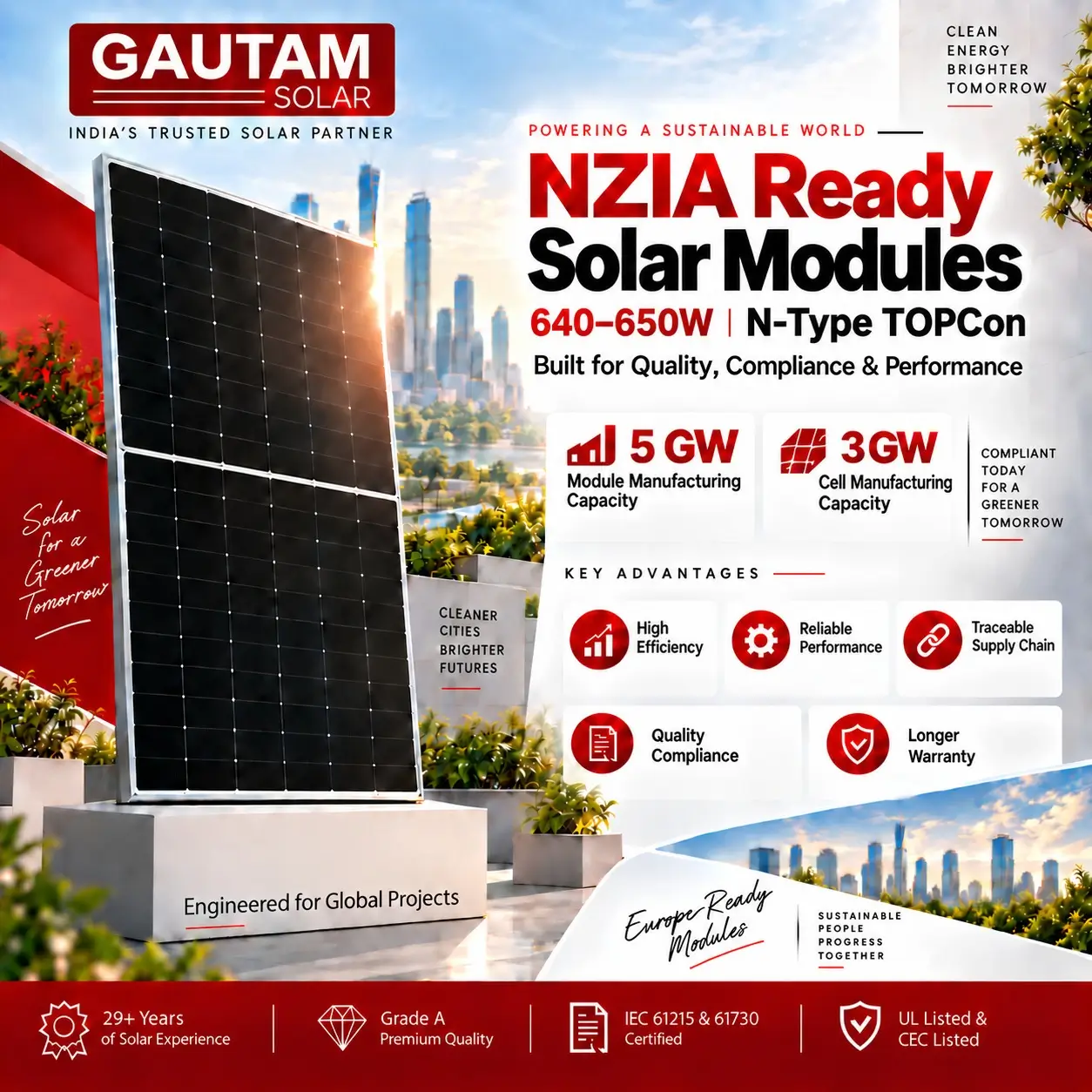
· 5 GW of solar module manufacturing capacity in India
· 3 GW of cell manufacturing capacity in India
· Module manufacturing facilities in Haridwar and Bhiwani
· N-Type TOPCon cell manufacturing at Malanpur, near Gwalior, Madhya Pradesh
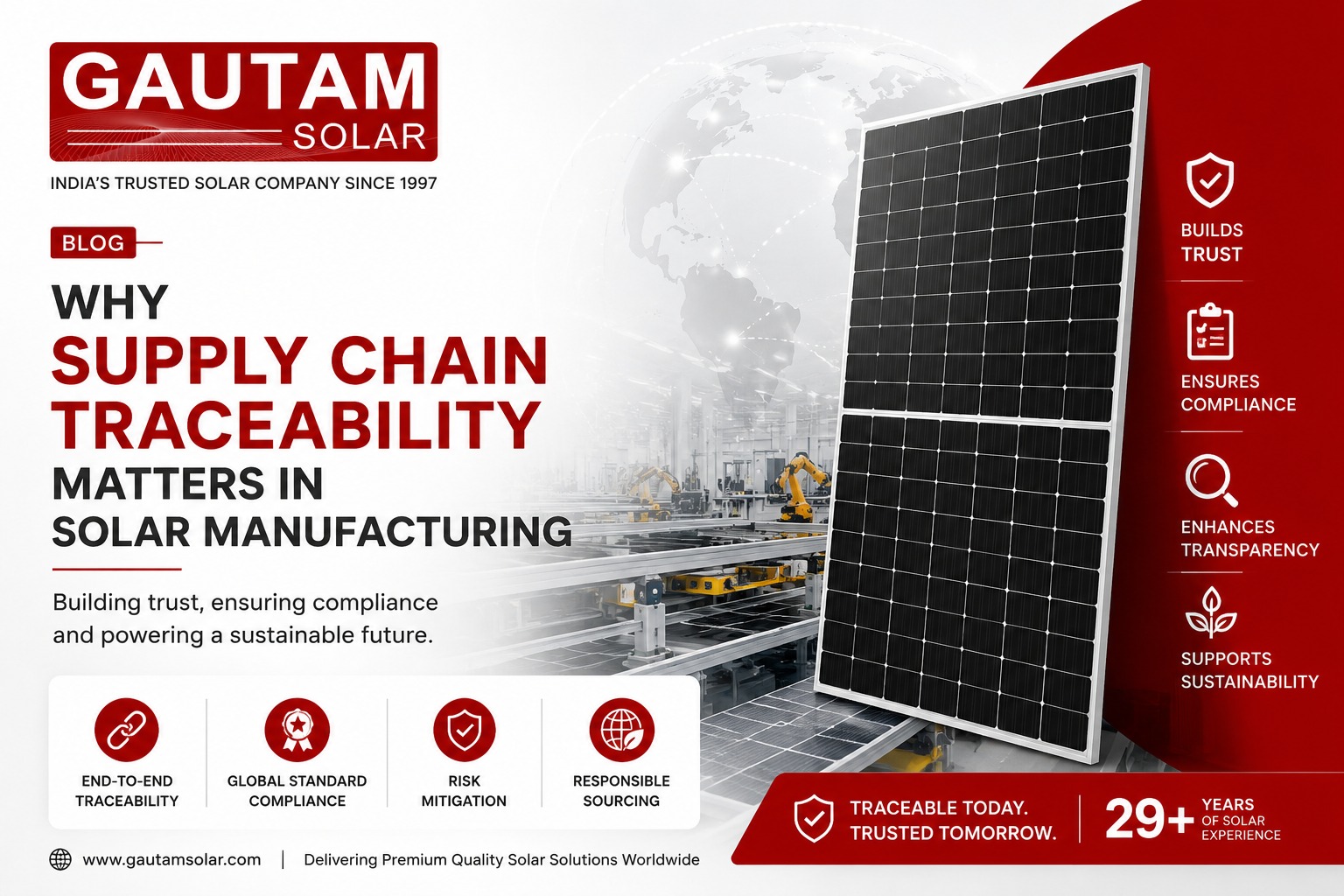
· Component-level supply-chain traceability
· Bill of Materials documentation for relevant components
These capabilities provide greater visibility into the manufacturing origin and supply chain of solar modules.
For European developers and EPC companies evaluating solar products for
NZIA-focused projects, manufacturing origin and traceability can be important
parts of the procurement process.
India-Made N-Type TOPCon Cells and Traceability
Solar cells are an important part of the photovoltaic supply chain and can be particularly relevant when buyers need to understand the origin of a solar module.
Gautam Solar manufactures N-Type TOPCon cells in India and provides origin documentation as part of its supply-chain traceability approach.
Traceability can extend across major module components, including:
· Solar cells
· Solar glass
· Encapsulants
· Junction boxes
· Aluminium frames
· Ribbons
This component-level visibility can help developers, EPC companies and procurement teams conduct supplier due diligence and prepare documentation for projects with specific origin or supply-chain requirements.
Learn more about Gautam Solar's technology through its N-Type TOPCon Solar Modules page.
Which Gautam Solar Panels Are Suitable for NZIA-Focused Projects?
Gautam Solar's N-Type TOPCon portfolio includes several high-efficiency
module ranges suitable for different project requirements.
G12 R TOPCon
The G12 R TOPCon series is available in the 620–640 Wp range, with module efficiency of up to 23.69%.
It uses rectangular N-Type TOPCon cells and is designed for high-efficiency
solar installations.
G12 TOPCon
The G12 TOPCon series offers module power of 690–720 Wp, with efficiency of up to 23.20%.
Its high-power configuration makes it suitable for large-scale solar
projects where module power and energy generation are important considerations.
M10 R TOPCon
The M10 R TOPCon series is available in the 590–600 Wp range, with module efficiency of up to 23.23%.
It provides another N-Type TOPCon option for commercial and utility-scale solar applications.
For any European project, the latest product datasheet and applicable
procurement requirements should be checked before selecting a specific module.
What Should European Solar Buyers Check?
When evaluating solar modules for a European project where NZIA-related requirements apply, buyers should look beyond module efficiency and price.
Important questions include:
1. Where are the solar cells manufactured?
2. Where are the modules assembled?
3. Can component origin be verified?
4. Is Bill of Materials documentation available?
5. Can the manufacturer provide supply-chain traceability?
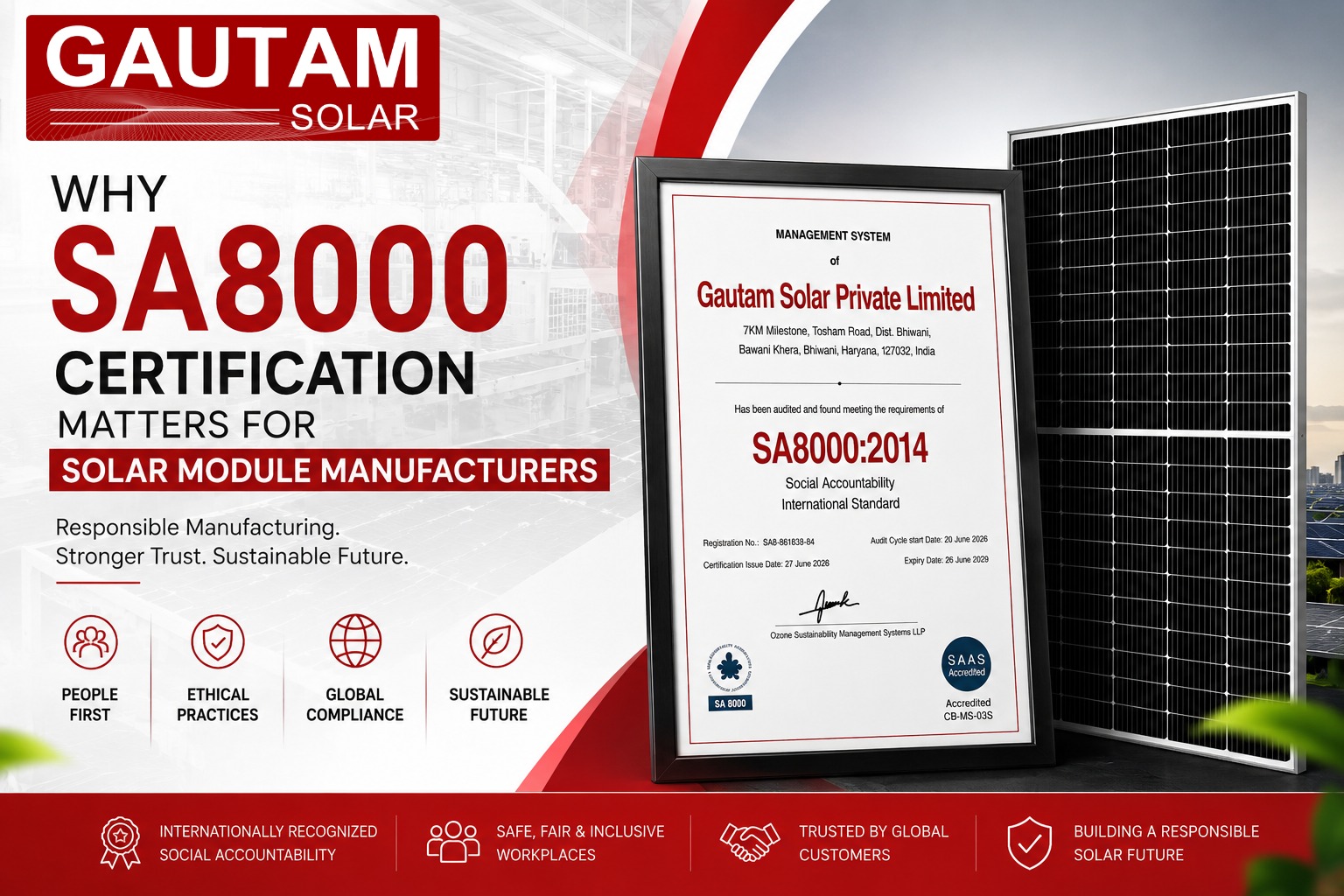
6. What sustainability and quality-management systems are in place?
7. Does the specific module meet the project's technical requirements?
8. Does the available documentation satisfy the applicable tender or auction requirements?
Having this information available can make procurement and supplier due
diligence more transparent.
Conclusion
The EU's Net-Zero Industry Act is bringing greater attention to supply-chain resilience, manufacturing origin, sustainability and component traceability in parts of the European solar market.
For manufacturers, transparent documentation and visibility across the solar supply chain can help address the information requirements of European customers.
Gautam Solar's India-based module and cell manufacturing, N-Type TOPCon technology and component-level traceability provide a foundation for supporting European buyers evaluating solar modules for NZIA-focused projects.
For product specifications and manufacturing information, explore the Gautam Solar ESG & Compliance Hub and N-Type TOPCon Solar Modules.