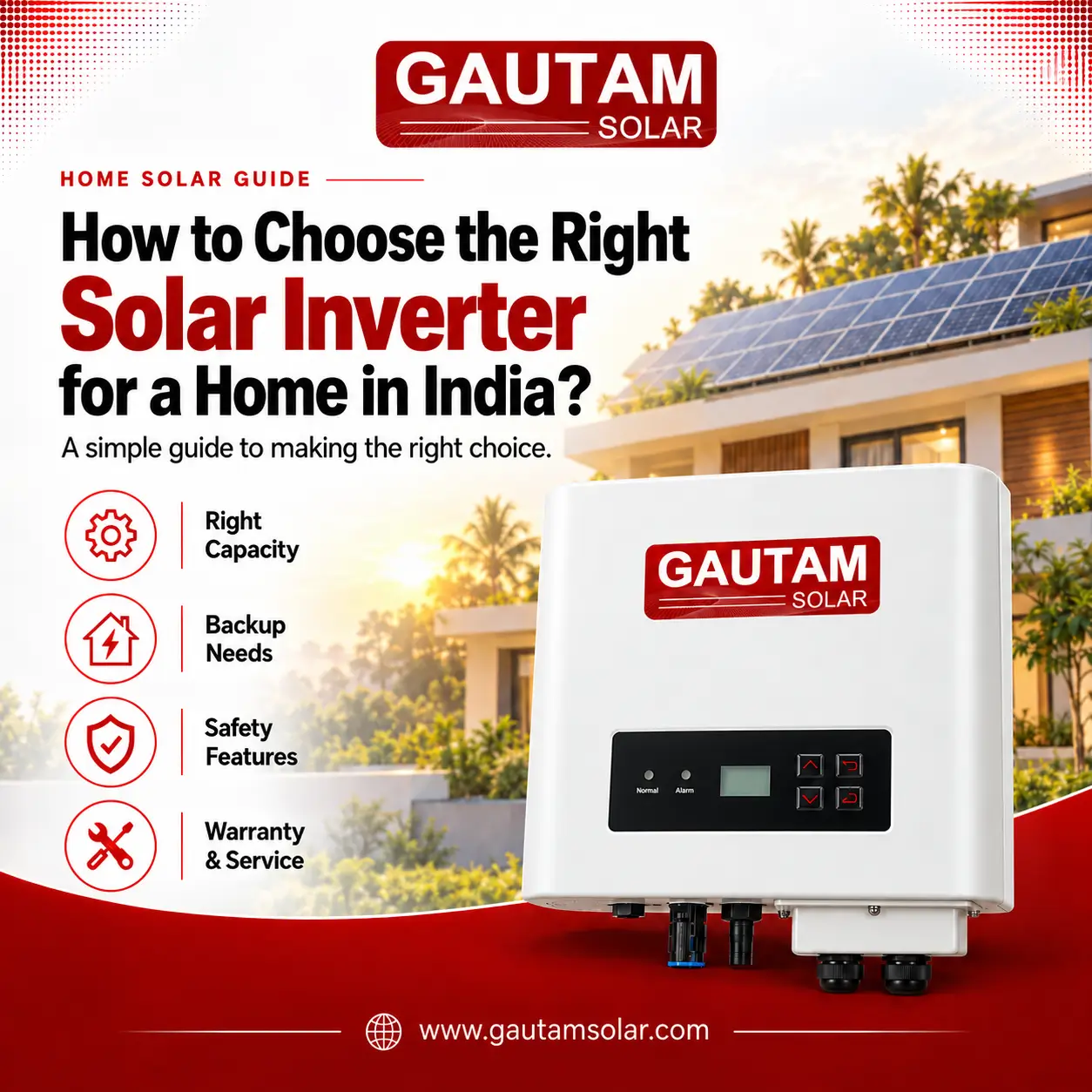
How to Choose the Right Solar Inverter for a Home in India?
Planning to install solar panels at home? Along with choosing the panels, you need to select a suitable solar inverter. It is an important part of your rooftop solar system because it converts solar electricity into power your household appliances can use.
The right solar inverter for a home in India depends on your solar panel capacity, electricity needs and backup requirements. You should also check safety features, warranty terms and service support.
This
guide explains what to consider before buying a home solar inverter.
What Is a Solar Inverter?
A solar inverter converts the direct current, or DC electricity, produced by solar panels into alternating current, or AC electricity. Household appliances such as fans, lights, televisions and refrigerators use AC electricity.
Some inverters also help manage batteries and monitor solar generation. However, these features vary by model.
Before
choosing an inverter, decide whether you want solar power mainly to reduce grid
electricity use, provide backup during power cuts, or support both needs.
1. Choose the Right Type of Solar Inverter
There are
three main options to understand: on-grid, hybrid and off-grid inverters.
An on-grid solar inverter works with your electricity grid connection. It allows your home to use electricity generated by solar panels.
Where the approved metering arrangement allows it, extra solar electricity can be sent to the grid. The billing benefit depends on local rules.
A
standard on-grid inverter shuts down during a power cut. It is suitable when
your main aim is to use solar electricity while the grid is available.
A hybrid solar inverter can work with solar panels, compatible batteries and grid electricity.
If you need power during outages, check that the model supports backup operation. Also confirm which appliances its backup output can run.
The word
“hybrid” alone does not tell you how much backup the system will provide.
Off-Grid Solar Inverter
An off-grid inverter is used in a system that operates independently of the electricity grid.
This type
of installation needs careful planning of panel capacity, batteries and
appliance use. It may suit locations without a grid connection.
2. Understand Your Home’s Electricity Needs
Start by checking your electricity bills. Review several months because your usage may change between summer and winter.
Also consider when your home uses the most electricity. For example, a household with people at home during the day may use more solar electricity directly.
Tell your installer about major appliances, including air conditioners, water pumps, refrigerators and electric cooking equipment.
For
backup, make a separate list of essential appliances. Keeping a few lights,
fans and a refrigerator running requires a different system from backing up the
entire house.
3. Select the Correct Inverter Capacity
Homeowners often ask whether a 3 kW or 5 kW solar inverter is better. The answer depends on the complete system design.
Your installer should check:
- The capacity of the proposed solar panels.
- Your electricity usage.
- Your electrical connection.
- Available rooftop space.
- The inverter’s allowed input limits.
- Backup loads, if required.
Do not choose capacity only by the number of rooms in your home.
Also, the
solar panel capacity and inverter output rating do not always need to be
identical. Your installer should follow the manufacturer’s design limits when
matching them.
4. Check Solar Panel Compatibility
A solar inverter must be suitable for the panels connected to it. Matching only the brand name or power rating is not enough.
Ask your installer to check the panel voltage, current and the number of panels connected in each group, called a string.
These values must stay within the inverter’s limits under expected weather conditions.
This is
especially important when adding panels to an existing system. An inverter may
not support extra panels simply because there is more space on the roof.
5. Understand MPPT in Simple Words
MPPT means Maximum Power Point Tracking. It helps an inverter get power from the connected solar panels as sunlight and other conditions change.
Some
inverters have one or more than one MPPT input. This can help when suitable
groups of panels face different directions.
For
example, panels on two roof sections may need separate connections depending on
the design.
However,
more MPPT inputs do not remove the effect of shade. Water tanks, nearby
buildings and trees still need to be considered during the rooftop assessment.
6. Check Safety Features and Protection
Ask for
the inverter’s technical datasheet and relevant certification documents.
Your installer should confirm that the selected model and installation meet the requirements that apply to your project.
Also discuss earthing, electrical protection and safe shutdown during a grid failure.
Check the enclosure’s IP rating, which describes protection against dust and water entry. An IP rating does not mean the inverter can be installed without following the manufacturer’s instructions.
Proper installation is as important as selecting suitable equipment.
7. Review Monitoring, Warranty and Service
Monitoring
can help you check how much electricity your solar system generates. Depending
on the inverter, you may view information through a display or a compatible
app.
Ask whether internet access is needed and who will set up the monitoring.
Read the
warranty terms before buying. Check what is covered, what is excluded and how
to raise a service request.
8. Understand the Total Installation Cost
Knowing the complete installation cost helps you plan your budget and avoid unexpected expenses.
Ask for a clear breakdown covering the inverter, installation, protection equipment, monitoring and applicable taxes. If you need power backup, confirm whether the battery and backup wiring are included.
Before
installation, check with your electricity distribution company about connection
and metering requirements, including any associated charges. Confirm subsidy
eligibility separately for your proposed system.
Explore Solar Inverter Options with Gautam Solar
Gautam Solar’s grid-tied inverter range includes monitoring connectivity and IP65-rated enclosures.
Request the latest model-specific datasheet to compare the available options with your rooftop solar requirements.
A site assessment can help you choose the right capacity, confirm panel compatibility and plan the installation. Share your electricity bills and backup expectations so the proposed system reflects how your home uses power.